


CEMI: A Model for Community-Driven Change

The Community Economic Mobilization Initiative (CEMI) was designed during a time of abundant federal funding, but its core value lies in how it builds nonprofit readiness and resilience beyond those funding cycles. Launched by The Center at Sierra Health Foundation (The Center) with seed funding from Sierra Health Foundation and The James Irvine Foundation in March 2022, CEMI provides flexible funding, technical assistance and advocacy support to BIPOC-serving and -tribal organizations across California. CEMI’s mission is simple and powerful: to help grassroots organizations grow stronger and lead lasting change. Rather than focusing only on securing funding, CEMI supports these groups in building solid foundations, forming meaningful partnerships and engaging in policy and advocacy change, ensuring that communities who have historically been excluded are leading the conversation on economic justice and climate resilience. Grantee partners receive personalized, one-on-one coaching tailored to their specific needs. Over time, this support helps build a more resilient and effective nonprofit sector.
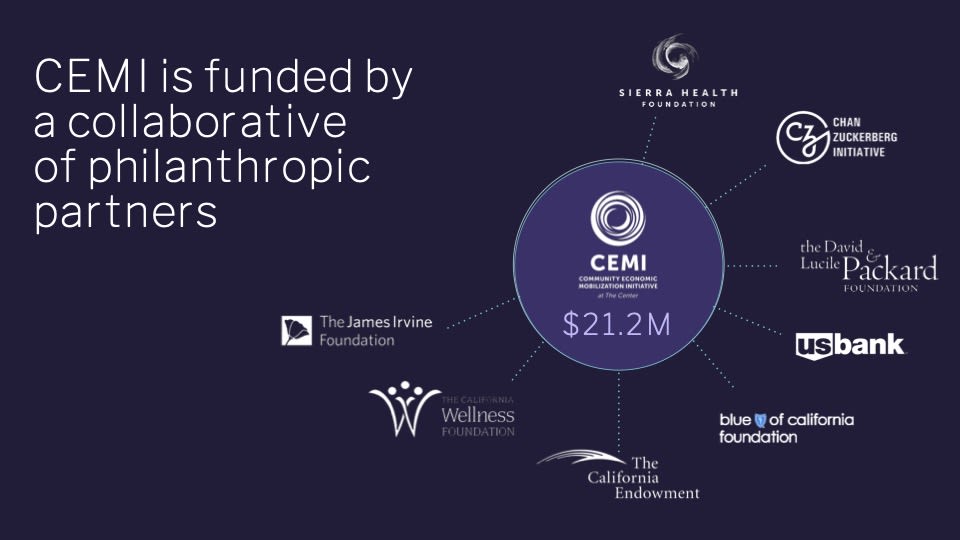
Funder partners and strategic allies play a vital role in this work. Their collaboration and investment make it possible to provide long-term, flexible support to not just strengthen individual organizations but shift systems to be more inclusive, equitable and sustainable. From the beginning, Sierra Health Foundation, The James Irvine Foundation, The California Endowment, The California Wellness Foundation, Blue Shield Foundation and others have generously supported CEMI. Additionally, the initiative has partnered with University of Southern California’s Dr. Manuel Pastor and University of California Santa Cruz’s Dr. Chris Benner and their team to facilitate the technical assistance, Pastor Michael McBride and his team at LIVE FREE USA for power building, Informing Change for evaluation and NextGen Policy to support CEMI with advocacy at the state level. These experts have helped CEMI become the robust initiative that it is today.

Capacity Building Isn’t Enough. Power Building Is Essential.
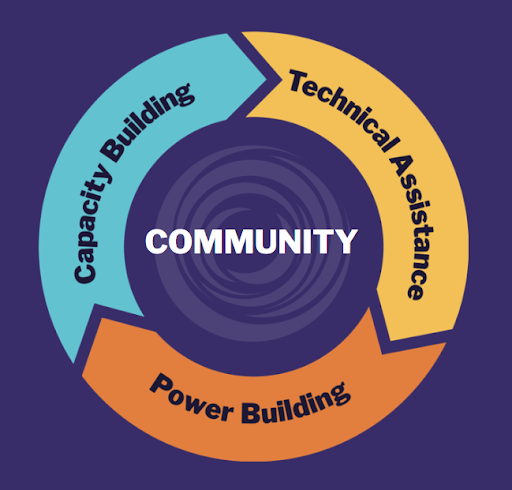
Traditionally, capacity building investment from philanthropy has not been a priority of community grantmaking. However, The Center Foundation founded CEMI on the belief that it takes more than just grants to create sustainable, impactful organizations. Equipping nonprofits with staff, systems and skills to strengthen internal capacity, scale programming, unlock additional funding and participate in planning and implementation is critical. Nevertheless, capacity building is not as effective without power building support to ensure that communities are positioned to shape priorities, influence funding decisions and hold systems accountable. Both are essential, and both must be invested in simultaneously. This is even more important today, as nonprofit organizations and the communities they serve face escalating threats to their health and safety from the rapidly shifting federal policy environment.
In the first year of the initiative, CEMI grantee partners used their funding to not only hire staff and develop projects, but to advance local advocacy, influence policy and coordinate regional movements. One organization used CEMI dollars to station a policy advocate in Washington, D.C. to ensure that decisions made nationally drive direct and meaningful benefit to their community in southern California. Another launched a campaign to create a “green cultural zone” in their neighborhood, aligning environmental goals with cultural preservation and community leadership as a way to both attract and weave in public funding for community priorities.in public funding for community priorities.

Stories From the Field – CEMI in Action
Despite increased pressures, CEMI partners are charging forward with an unwavering commitment to the communities they serve. It is inspiring to witness this determination in the face of immense uncertainty.
The Salton Sea/Imperial Valley region of California has been under public scrutiny for much of the past year, due to the impending lithium extraction and its impact on the economy, climate and livelihoods of local communities. CEMI partner Alianza Cochella Valley is working in the Salton Sea to ensure that the communities impacted are able to influence the decisions that are made related to lithium extraction. The organization advocated to get SB 867 – the Climate Resilience Bond – on the November 2024 ballot, and it ultimately passed. This legislation allocated $170 million to the Salton Sea to address air quality, public health and habitat restoration. This is a huge win for the region, thanks to the tireless work of CEMI partners.
Supporting a strong workforce and thriving small business ecosystem are also priorities for CEMI partners throughout California. CAMEO Network is comprised of 400+ member organizations who serve 200,000 microbusinesses nationwide with training, business and credit assistance, and loans. These firms — often startups with less than 5 employees — support or create 300,000 new jobs every year. Small Business Majority is working to advocate for policy changes around the economic impact that federal healthcare policy – for example cuts to Medicaid – has on many of the same communities that CAMEO Network serves.
In Los Angeles, Community Development Technologies (CDTech) has utilized the resources and community that CEMI has provided to build a strong workforce development network in the South Central neighborhood of the city. In late 2024, CDTech established a partnership with LA County Supervisor Holly J. Mitchell to create a three-year Community Hiring Pilot Program. Passed by the LA County Board of Supervisors, the pilot will be countywide and connect high-road jobs from five of the school district’s largest procurement contracts to residents living in zip codes with high rates of poverty. “This pilot program links procurement, workforce development, and economic mobility into a coordinated strategy that will provide quality job opportunities for talented and qualified residents in communities that have faced historical under investment and high rates of poverty,” said Supervisor Holly J. Mitchell. “We have an opportunity to show how equitable hiring practices tied to how we spend our money are good for business and for strengthening our efforts to end the cycle of poverty.” The Board will receive a report back within 90 days with a list of the five eligible contracts, community hiring goals, and a timeline for implementation. The pilot will also include targeted outreach to community partners in the workforce development pipeline to support referrals of qualified job seekers.
Additionally, CEMI partners located in the “True North” part of the state have come together to form a coalition to better support the needs of the communities they serve. These organizations are geographically spread out over rural terrain, sometimes traveling hundreds of miles to attend monthly coalition meetings. They call themselves “CEMI North State” and are the first group of its kind in the region. The collaborative – which includes CEMI partners, local officials and other community partners – has spent months brainstorming around the biggest needs of their communities and has decided to focus on assessing the feasibility of establishing the first Community Development Financial Institution (CDFI) in the region.

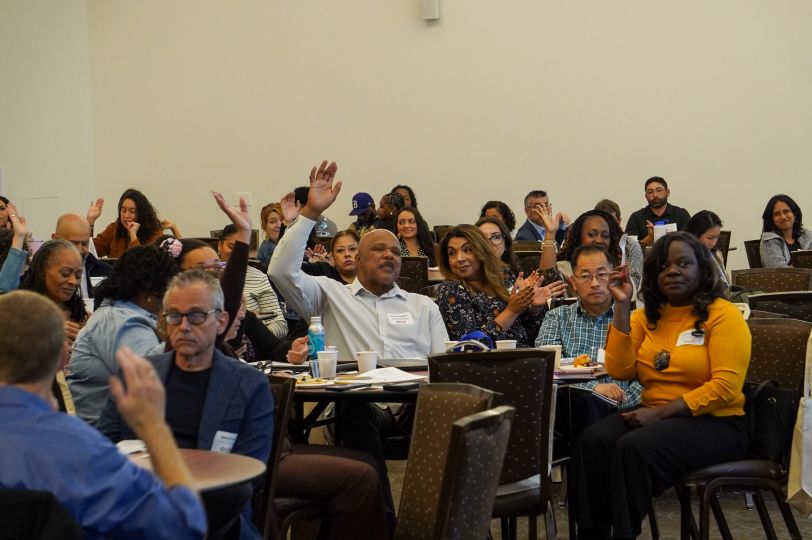
Across California, CEMI is driving the movement for positive change. In the current policy and political climate, it is even more important for funders to support organizations more holistically, not just to fund important work, but to strengthen and build more resilient nonprofits, coalitions and the sector overall.
To learn more about CEMI or collaborate in this important work, please visit https://www.shfcenter.org/programs-and-initiatives/community-economic-mobilization-initiative-cemi/ or email CEMI@shfcenter.org.
"CEMI was the second largest grant that our organization had received. This investment and the resources that were offered as part of CEMI were timely and made it possible for us to step up in a critical moment for economic and environmental justice in the community of Imperial Valley. Because of CEMI and how flexible the dollars were, our organization was able to leverage the employment of five staff organizers, train our new staff in the areas of community organizing, fund development, and research which is something that our organization did not have capacity for, and leverage the funds to grow from having an operational budget of $50,000 to one of $750,000 per year."
- Daniela Flores, MPH — Executive Director, Imperial Valley Equity & Justice

This content was paid for and created by The Center at Sierra Health Foundation. The editorial staff of The Chronicle had no role in its preparation. Find out more about paid content.
 Built with Shorthand